

Property Management System: 7 Benefits for Modern Residential Communities
Introduction
Property Management System is becoming essential for modern residential communities. Managing a residential property today is more complex than ever, with property managers and Joint Management Bodies (JMB) handling billing, maintenance, security, communication, and daily operations at the same time.
Manual systems, paperwork, and disconnected tools often lead to delays, miscommunication, and operational inefficiencies. This is why many communities are now adopting a Property Management System.
What Is a Property Management System?
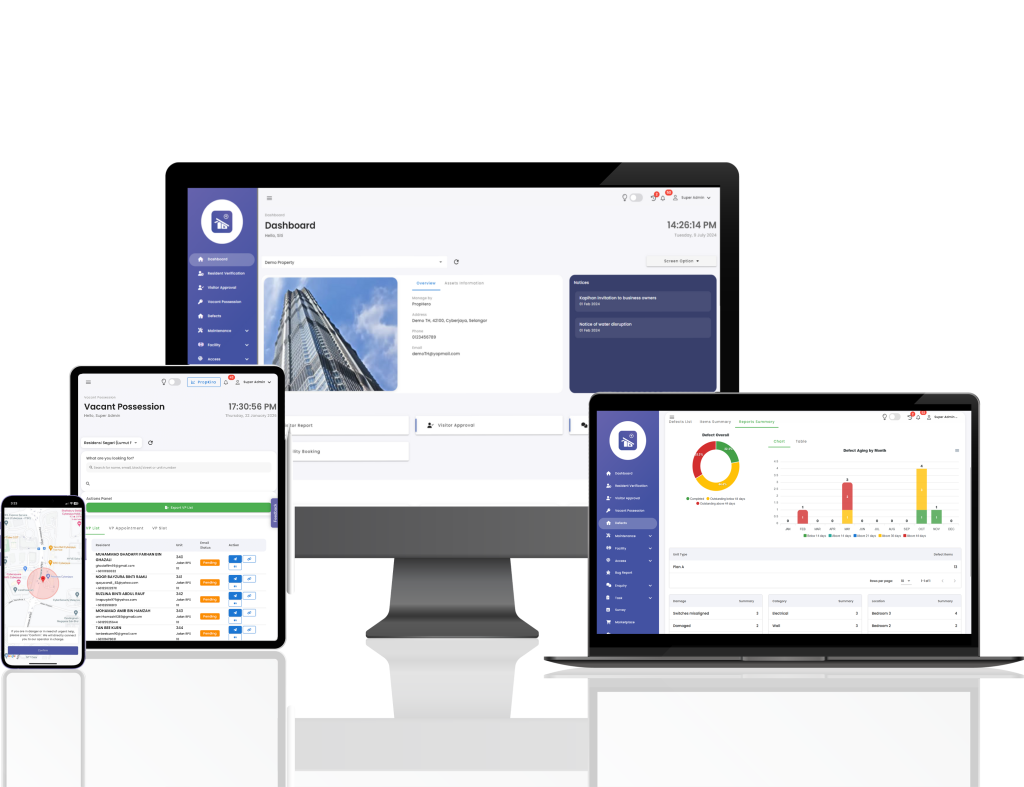
A Property Management System is a digital platform designed to help property managers handle daily operations more efficiently.
It usually includes features such as:
Billing and payment tracking
Visitor management
Maintenance requests
Facility booking
Resident communication
Security monitoring
All these functions are managed in one centralized system.
7 Benefits of a Property Management System
1) Centralized Management in One Platform
A property management system combines multiple functions into one platform.
Managers no longer need separate tools for billing, communication, and maintenance.
This reduces confusion and improves overall efficiency.
2) Automated Billing and Payment Tracking
Manual billing can lead to:
Late payments
Missing records
Human errors
With an automated system:
Invoices are generated automatically
Payment reminders are sent to residents
Transactions are tracked in real time
This improves cash flow and reduces administrative workload.
3) Better Communication with Residents
Communication is one of the biggest challenges in residential communities.
A property management system allows:
Instant announcements
Push notifications
Digital notice boards
Resident surveys
This ensures residents always stay informed.
4) Improved Security and Visitor Management
Modern systems often include:
Visitor registration
QR code access
Real-time visitor tracking
Panic or emergency buttons
This enhances the safety of residents and gives management full visibility over who enters the property.
5) Efficient Maintenance and Defect Tracking
Handling maintenance requests manually can be slow and unorganized.
A property management system allows:
Residents to submit requests online
Automatic ticket creation
Task assignment to maintenance teams
Real-time status updates
This results in faster issue resolution and happier residents.
6) Easier Facility Booking
Facilities like:
Function halls
Gyms
BBQ areas
Sports courts
can be booked through the system.
Residents can:
Check availability
Book instantly
Receive confirmation
This eliminates scheduling conflicts and manual records.
7) Data-Driven Decision Making
A digital system stores all operational data in one place.
Managers can:
Generate financial reports
Track payment trends
Monitor maintenance performance
Analyze resident feedback
This helps management make better and faster decisions.
Who Should Use a Property Management System?
This system is ideal for:
Condominiums
Apartments
Gated communities
Commercial buildings
Mixed-use developments
Any property with multiple units and shared facilities can benefit from a digital management system.
Conclusion
A Property Management System helps modern residential communities operate more efficiently, securely, and professionally.
By automating billing, improving communication, enhancing security, and simplifying maintenance, property managers can save time and reduce operational problems.
As residential communities continue to grow, adopting a digital property management system is becoming a necessity rather than an option.
FAQ
1) What does a property management system do?
It helps manage billing, maintenance, communication, security, and daily operations in one platform.
2) Is a property management system suitable for small communities?
Yes. Even small residential communities can benefit from automation and better communication tools.
3) Can a property management system improve security?
Yes. Many systems include visitor tracking, access control, and emergency features.
4) Does it reduce management workload?
Yes. Automation reduces manual tasks, paperwork, and repetitive processes.
