

5 Hidden Dangers of Not Reporting Defects in Your Home
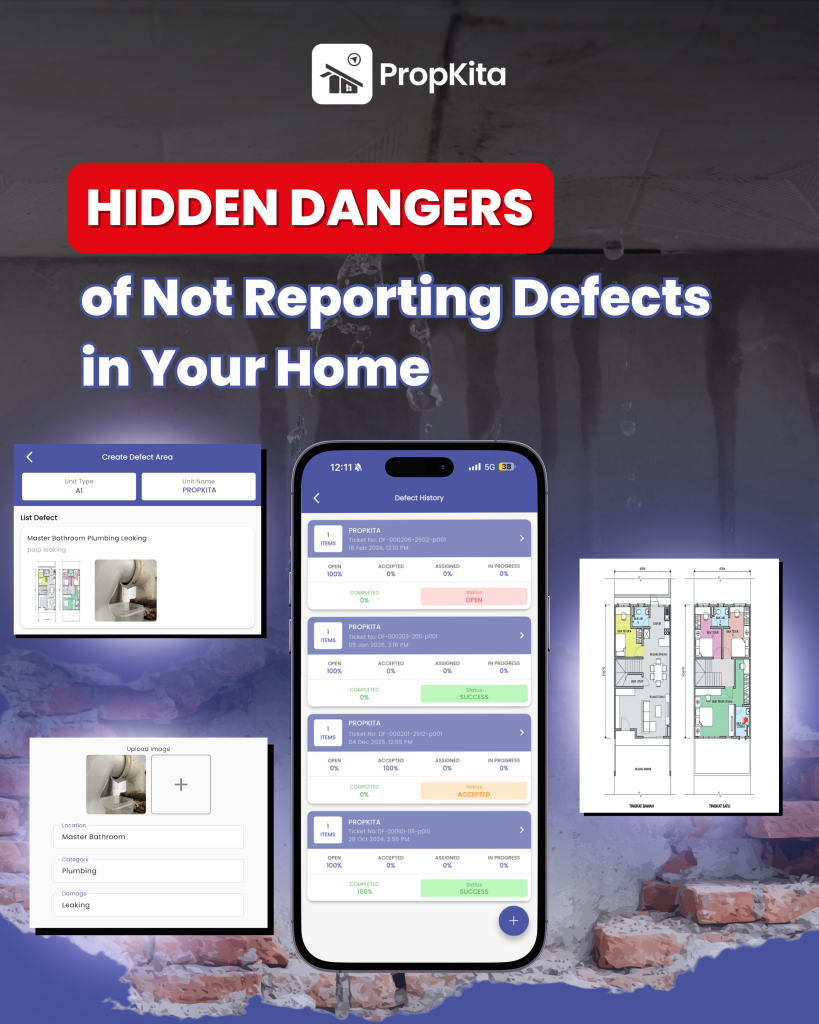
In modern property management, even small defects like leaks or faulty lights can turn into serious issues if left unreported, affecting safety, costs, and management reputation. Proper defect reporting ensures a safer and more well-managed living environment, yet many issues are still missed due to reliance on verbal communication or scattered WhatsApp messages.
Why Reporting Defects is Important
Reporting defects is not merely about pointing out faults—it is about prevention, accountability, and proactive maintenance. When defects are reported early, management teams can respond quickly and prevent further deterioration. Learn more about how small defects can impact buildings
Timely defect reporting helps to:
- Reduce long-term maintenance costs
- Prevent safety hazards
- Maintain building standards and compliance
- Improve communication between residents and management
- Preserve the overall value of the property
A structured defect reporting process ensures that issues are addressed before they affect daily living conditions or lead to costly repairs.
Consequences of Not Reporting Defects
Small Issues Become Big Problems
One of the most serious consequences of not reporting defects in your residence is escalation. Minor defects rarely stay minor when ignored.
For example:
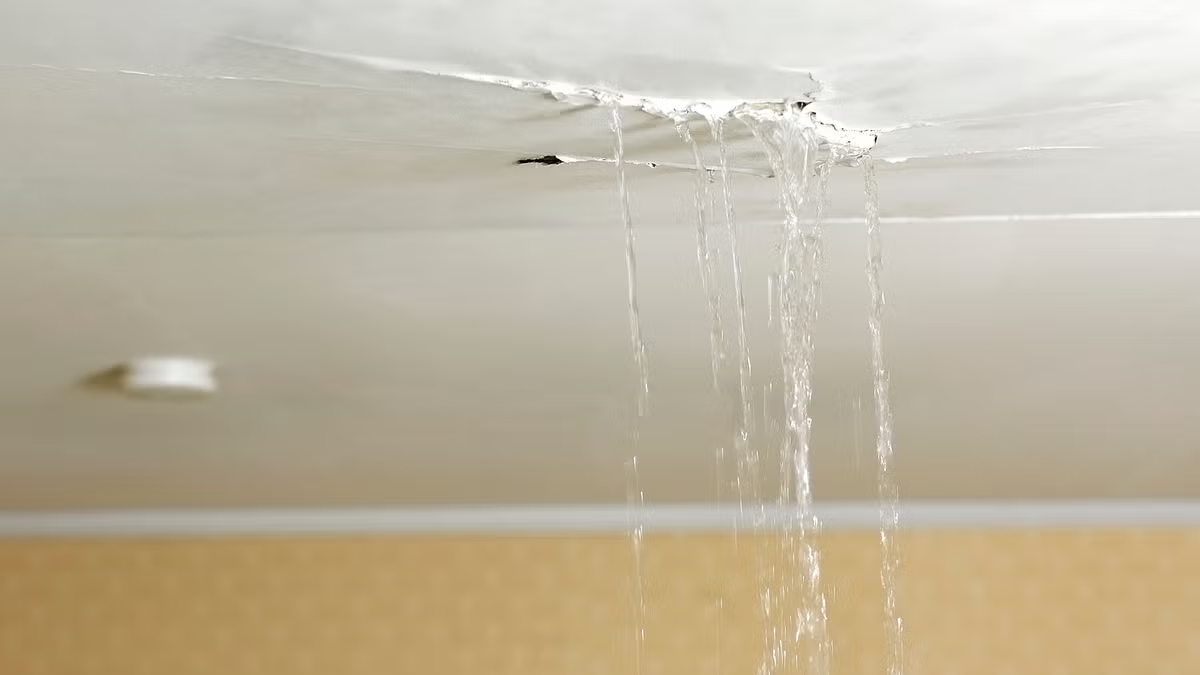
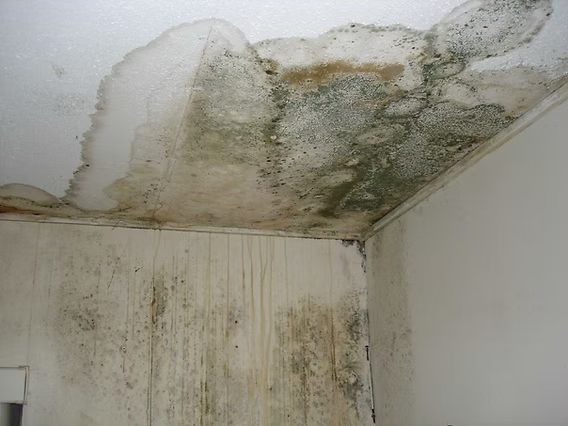
- A small water leak can weaken walls, ceilings, and flooring
- Loose electrical fittings can become fire hazards
- Poor drainage may cause flooding during heavy rain
- Faulty lifts can lead to breakdowns or safety incidents
These issues often start small but grow rapidly when no action is taken. What could have been resolved with a simple repair may later require major renovation work.
Learn more about how small defects can impact buildings
Resident Safety is at Risk
Safety is critical. Unreported defects can cause:
Accidents from slippery floors or broken elevators
Health issues from leaks or mold growth
Difficult evacuation during emergencies if safety systems fail
Property managers who do not systematically manage defects increase accident risks and liability exposure.
Difficulty in Tracking Responsibility and Actions
Another major consequence of not reporting defects in your residence is the lack of accountability. Without a formal record:
- There is no clear timeline of when the defect occurred
- It is difficult to identify who reported the issue
- Follow-up actions are hard to track
- Disputes may arise between residents, management, and contractors
A proper defect reporting system creates transparency. It ensures that every reported issue has a clear status, responsible party, and resolution timeline.
Property Management Reputation Suffers
Management that responds slowly appears inefficient and unconcerned. Residents lose trust, affecting the management’s reputation:
Lower resident satisfaction
Repeated complaints left unresolved
Negative perception of management professionalism
Maintaining a good image requires quick response and clear defect records.
Property Value Decreases
Poorly maintained residences show signs of deterioration:
Worn-out facilities
Unkempt common areas
Recurring unresolved complaints
This negatively affects market value, making leasing or selling units more difficult.
Challenges of Manual Reporting
Many management teams still rely on:
- Verbal complaints
- Scattered WhatsApp messages
- Paper forms
Manual reporting is prone to:
- Lost information
- Difficulty tracking status
- Lack of structure
How PropKita Helps
PropKita offers the DEFECT feature to simplify defect reporting and management:
- Comprehensive Digital Reports – Each defect is recorded with images, date, location, and description.
- Status Tracking – Track defects from “new” → “in progress” → “resolved”.
- Audit-Ready Records – All reports are stored as official documentation.
With PropKita, defects are no longer lost complaints — they become data that can be monitored, managed, and resolved systematically.
Tips for Residents and Management
To handle defects effectively in residences:
- Report Immediately – Don’t wait for minor defects to escalate.
- Use Digital Systems – Platforms like PropKita make reporting structured and trackable.
- Include Photos – Visual evidence strengthens defect documentation.
- Monitor Responses – Ensure defects are addressed within a reasonable timeframe.
- Audit Records Regularly – Prevent any defect from being overlooked and maintain complete reports.
Turn Complaints into Action
Don’t wait for small defects to become big problems. Use PropKita’s DEFECT feature to:
- Report defects instantly
- Track repair status in real-time
- Reduce long-term repair costs
- Ensure resident safety and comfort
Conclusion
This is where PropKita provides a practical, modern solution through its DEFECT feature, allowing residents and management to submit digital defect reports complete with images, locations, and timestamps. Every report can be tracked from submission to resolution, creating a clear and auditable record. Instead of scattered messages or forgotten complaints, all defects are managed efficiently in one centralized system.
